

Cataracts are a total or partial opacity of the eye’s crystalline lens. They develop because the lens gradually loses transparency (which is why they most commonly appear with age), which causes it to lose elasticity and transparency, making the person unable to see clearly. It is a condition that can only be treated by surgery, which is why today we would like to explain what cataract surgery involves.
At Clínica Rahhal, we have been operating on this and other conditions for more than 30 years. We have an expert medical team as well as the most cutting-edge eye surgery technology. If you would like to read all the details about this surgery, keep reading.
What are cataracts?
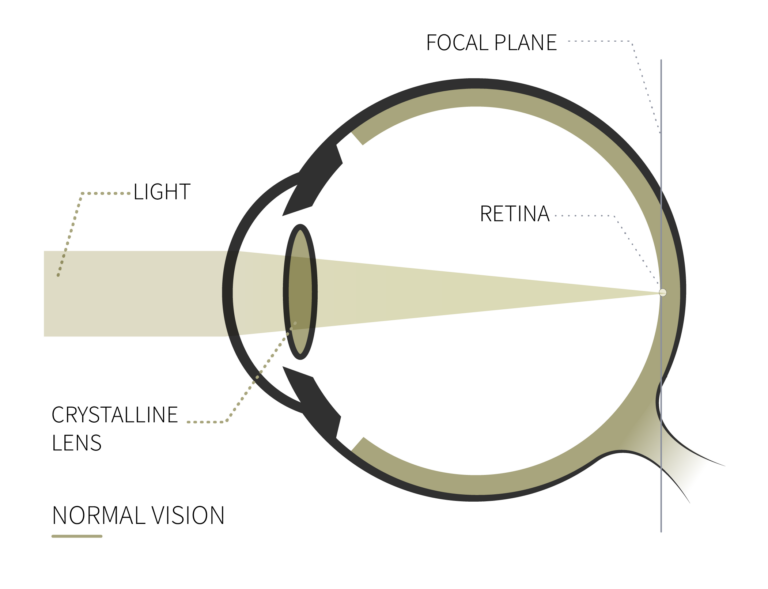
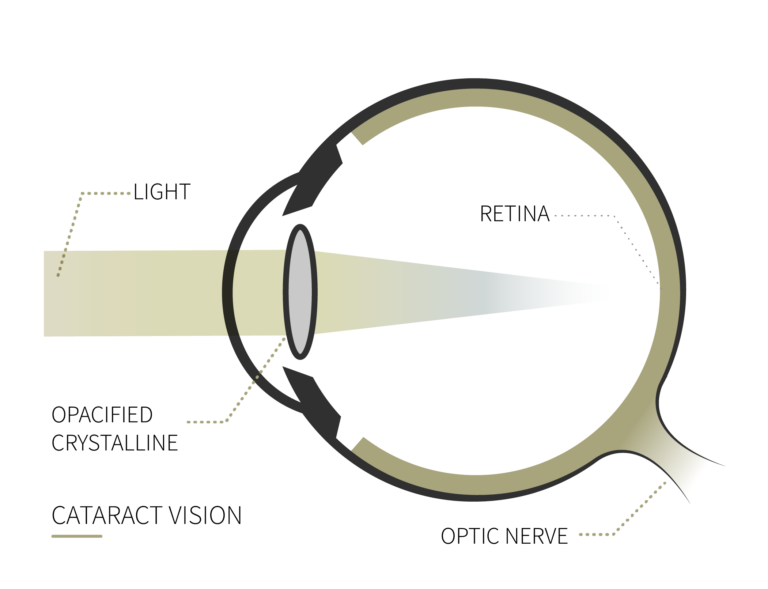
A cataract is the result of the natural aging of the lens, which leads to its sclerosis (loss of elasticity) and opacification (loss of transparency). As a consequence, light rays do not properly reach the retina, and the patient is unable to see clearly.
That’s why, at Clínica Rahhal, we want to explain in this article what cataract surgery is like in detail: which techniques are used, who should undergo surgery and when, what the preoperative and postoperative processes involve, as well as results, patient reviews, and pricing.
Types of cataracts
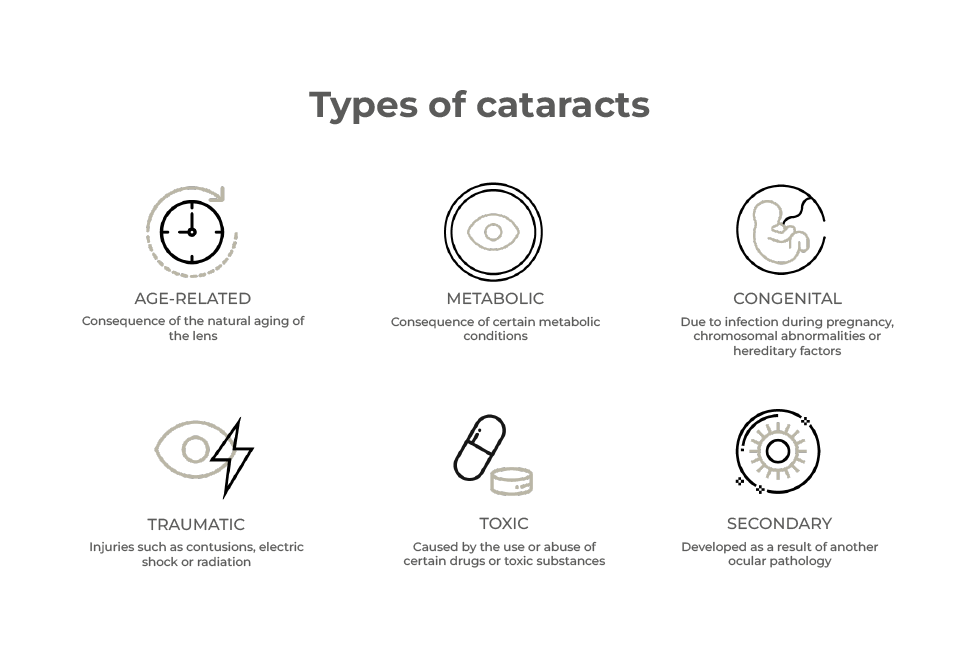
It is common to think that cataracts are only a consequence of age and the natural aging process. However, this is not the only type of cataract that exists; depending on their cause and the time of onset, the following types can occur:
- Senile cataract: These are a result of the natural aging of the lens and lead to a progressive loss of transparency.
- Metabolic cataracts: These occur as a consequence of certain metabolic conditions that cause alterations in the lens.
- Congenital cataract: Cataracts in children are uncommon. They may be caused by infections during pregnancy, chromosomal abnormalities, or hereditary factors.
- Traumatic cataract: These develop rapidly and are caused by physical injuries affecting the lens, such as blunt trauma, electric shock, or radiation.
- Toxic cataract: These are induced by the use or abuse of drugs or toxic substances, such as topical or systemic corticosteroids.
- Secondary cataract: These develop as a result of another eye condition (high myopia, angle-closure glaucoma, chronic anterior uveitis, etc.).
Cataract symptoms
Many patients ask us whether it is possible to detect cataracts or prevent their onset. Cataracts usually develop gradually, so patients often do not notice a decline in their visual quality until they are moderately advanced.
For this reason, we would like to share some of the main symptoms you may notice. It is very important that if you experience any of these, you visit an ophthalmologist for a more thorough examination, so they can provide an accurate diagnosis and confirm whether it is cataracts and whether surgery is necessary:
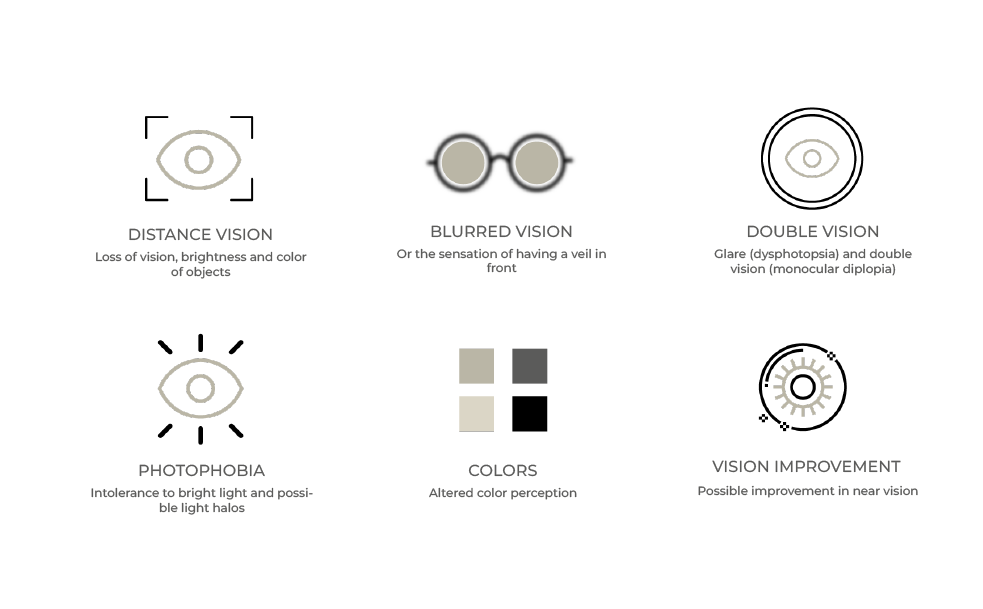
- Loss of distance vision. Reduced color perception and brightness of objects.
- Blurred vision or the sensation of having a veil in front of the eyes.
- Glare (dysphotopsia) and double vision (monocular diplopia).
- Photophobia: Intolerance to bright light, sometimes with halos around lights.
- Less vivid colors: Colors may appear dull or faded, as if they have lost intensity.
- Apparent improvement in vision: In some cases, patients may feel their near vision has improved. This is known as secondary vision.
Before surgery: preoperative assessment
You may have noticed some of the early symptoms of cataracts and are considering surgery. That’s why we’re going to walk you step by step through what cataract surgery is like, starting with the preoperative assessment, continuing with the procedure itself, and finishing with the postoperative phase.
Before the operation, the team at Clínica Rahhal always performs a preoperative assessment to evaluate the patient’s visual condition and determine whether they are a suitable candidate for surgery. This assessment includes several ophthalmological tests that help determine both the patient’s suitability and the most appropriate surgical technique to use.
BASIC OPHTHALMOLOGICAL EXAMINATION
This examination consists of a series of basic tests that help us assess the overall condition of the eye and the feasibility of the surgery. They will determine whether the patient is a suitable candidate for the operation.
Some of these tests include:
-
- Visual acuity measurement
- Refraction (vision prescription assessment)
- Analysis of the anterior and posterior structures of the eye
- Tonometry
- Visual field examination
ADDITIONAL TESTS
Once it has been confirmed that the patient is suitable for surgery, a series of additional tests are carried out to determine the most appropriate surgical technique. For a more detailed overview of all the tests we perform, you can visit our page where we explain the preoperative assessment in depth, or you can book an appointment at our clinic.

“The professionalism, friendliness, punctuality, and general environment and, above all, my cataract surgery which went smoothly and was very comfortable right from the first minute.”
María Isabel Delgado
Cataract surgery
Before explaining in detail what cataract surgery involves, it is important to understand that the only effective treatment for removing cataracts is surgery. This condition cannot be treated with glasses, contact lenses, or medication.
Cataract surgery replaces the clouded natural lens with an intraocular lens (IOL).
Cataracts are removed using the phacoemulsification technique with intraocular lens implantation. This technique can be assisted by the use of a femtosecond laser (femto-phaco), or in some cases replaced by the use of a nanolaser.
Phacoemulsification
What is it and how is the procedure performed?
Phacoemulsification is a micro-incisional procedure for cataract surgery that does not require stitches and is performed entirely on an outpatient basis.
This technique uses an ultrasonic tip that fragments the clouded lens, and through a surgeon-controlled aspiration system, the cortical material is removed via a minimal incision.
Advantages of phacoemulsification
Phacoemulsification offers several key advantages over other techniques:
- No sutures required, reducing the risk of incision-related complications.
- Faster healing and earlier visual recovery.
- Lower induced astigmatism.
Nanolaser
What is it and what is it used for?
El nanoláser se ha abierto camino en la oftalmología como sustituto de la técnica de facoemulsificación, empleada para la eliminación del núcleo del cristalino en la cirugía de cataratas y presbicia.
Nanolaser has emerged in ophthalmology as an alternative to the phacoemulsification technique, used to remove the lens nucleus in cataract and presbyopia surgery.
This laser represents a state-of-the-art alternative in intraocular surgery for selected patients. Unlike phacoemulsification, which uses ultrasound energy, nanolaser does not generate heat in the surrounding tissue, thereby helping to reduce some of the risks associated with intraocular surgery.
Who is a suitable candidate for this surgery?
It is very important to carry out a prior assessment to determine which type of technique is most appropriate for the patient and whether they are a suitable candidate for trifocal lens implantation. However, everyone is a candidate for cataract surgery.
What is cataract surgery like?
Before surgery with an intraocular lens
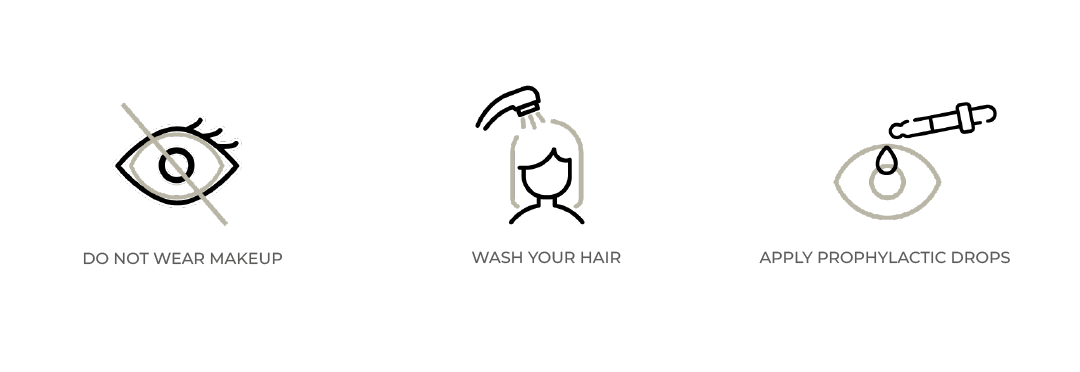
Although your doctor will explain in detail the specific protocols to follow in your particular case in the days leading up to surgery, some of the most common recommendations usually include:
- Do not wear eye makeup for two or three days before the surgery.
- Wash your hair before the operation so you won’t need to do so immediately afterward.
- Use prophylactic eye drops as prescribed by your doctor.
Cataract surgery
Many of our patients ask us when the optimal time for surgery is and whether it is possible to delay it. The best and most recommended approach is that, as soon as you experience any of the symptoms mentioned above, you visit your trusted ophthalmology clinic so that an expert team can assess your particular case.
But if you have already decided to undergo surgery, you will want to know in detail what cataract surgery is like.
Each surgery has its own specific details, which is why, if you want more precise information, it’s best to ask your doctor, who will be able to guide you more accurately. However, it’s important to know that it is a simple and fairly quick procedure that usually delivers very good results.
Intraocular Lens types
The type of intraocular lens to be implanted is chosen based on the patient’s needs and daily activities. The following types of intraocular lenses are available:
- Monofocal: Provides good distance vision and requires the use of reading glasses.
- Multifocal: Offers good distance and near vision, allowing greater independence from glasses, which are only needed for prolonged reading, precision tasks, low-light conditions, or computer use.
- Toric: Available in monofocal or multifocal versions, it also corrects the patient’s astigmatism.
When should I have cataract surgery?
Cataract surgery is recommended when the loss of vision caused by the condition begins to interfere with the patient’s daily activities. This limiting visual impairment usually occurs at around 0.5 on the ophthalmological scale (and sometimes even earlier). At this point, tasks such as driving and even reading can become difficult.
How long does cataract surgery take?
Cataract surgery is a relatively simple procedure performed under local anesthesia. It typically lasts around 20 minutes in most cases, making it quite quick, and the patient does not feel pain during the procedure.
Who will perform my surgery?
It is very important, before making the decision to undergo surgery, to be well informed about who will perform the procedure. At Clínica Rahhal, we are pioneers in advanced eye surgery and have a highly experienced medical team in cataract procedures, as well as the latest technological advancements to ensure outstanding results.
In the anterior segment specialized medical unit, Dr. Rahhal, Dr. Alonso, Dr. Rahhal, and Dr. Molina work on a daily basis.

“Dr. Rahhal performed my cataract surgery on both eyes and I can’t say enough about his professionalism and his excellent work. Dr. Rahhal and all his team provide a friendly and warm environment, making them feel comfortable and at ease”.
Antonio Gordillo
Advantages of cataract surgery with intraocular lenses
We have already seen what the preoperative and cataract surgery involves, but now we would like to discuss the main benefits of this surgery. Intraocular lenses are made of a biocompatible material, adapted to each patient’s needs. As it is a harmless material, the lens will last a lifetime, and the vast majority of patients do not experience any complications with their lenses after cataract surgery. Some of the main benefits are:
- Corrects more defects: It can also correct refractive errors (myopia, hyperopia and astigmatism).
- At any time: You do not have to wait for the cataract to mature before the surgery is performed.
- Straightforward surgery: Sutureless surgery with quick recovery. The surgery is performed on an outpatient basis.
Is there no going back after cataract surgery?
One of the other things that most concern our patients about cataract surgery is whether it is final, and the answer is yes. Nowadays, intraocular lenses are manufactured with highly advanced materials that offer a sufficient guarantee that they will last a lifetime.
What is “lens fouling”?
In cataract surgery, the opacified lens is replaced by an intraocular lens. In all cases these lenses are inert and biocompatible, in other words, they are completely harmless to the eye. Over the years, the posterior capsule of the crystalline lens on which the intraocular lens is implanted becomes fibrotic, causing visual impairment months/years post-surgery. This is what is generally known as “lens fouling”, although it is not the intraocular lens that gets dirty, but the capsule it rests on. This is quickly and easily solved by performingYAG capsulotomy. The time to onset of posterior capsular opacification varies greatly depending on the type of surgery, intraocular lens and inherent characteristics of each patient, and may develop a few months post-surgery or perhaps even many years down the line. Nevertheless, regardless of the time of onset, in most cases it will take 3 to 6 months post-surgery before action can be taken.
Can I correct myopia, hyperopia and/or astigmatism in the same surgery?
Yes. When the intraocular lens that replaces the crystalline lens in the surgery is calculated, it is adjusted to correct the myopia or hyperopia of the patient’s eye. The same goes for astigmatism, there are several techniques to correct astigmatism during cataract surgery. One of these techniques entails making relaxing incisions that reduce astigmatism, the other uses special toric lenses to correct astigmatism. In this case, the result is not as predictable as when correcting myopia or hyperopia but it is always significantly reduced.
Can I have cataract surgery if I have had myopia, astigmatism and/or hyperopia?
Yes, in fact, at Clínica Rahhal, this is usually the case. In these cases, we simply need to know that the patient has undergone refractive surgery so that the ophthalmologist can request the relevant tests to assess the shape of the cornea. Then, using a series of specific formulas, the power of the lens to be implanted inside the eye during cataract surgery is determined.
Will I have 100% vision post-surgery?
It is normal for a healthy eye that could see 100% before the cataract to have 100% vision post-surgery. Just as if, due to vision impairment, the patient’s eye only had 70% vision, post-surgery it will have a maximum of 70% vision. Therefore, it is normal to regain the degree of vision that the patient had before the cataract.
Postoperative care after cataract surgery
In general terms, the postoperative period after cataract surgery is quite quick and comfortable for the patient. At Clínica Rahhal, we usually recommend that our patients rest for the first 48 hours. We also provide a series of guidelines to follow during the first hours after surgery, as well as in the following days until full recovery.
We have already explained the details of what cataract surgery is like. Next, we will address the most common questions our patients usually have regarding the postoperative period, along with some recommendations and advice from our expert team.
After the surgery
After the surgery, your doctor will give you specific instructions to follow, but there are some general things you should keep in mind during the first few hours after the procedure. It is important to follow these guidelines carefully to avoid any type of complication:
-
- Come accompanied: It is recommended that you come with someone who can help you get home, as you will not be able to drive after the surgery.
- Bring sunglasses: To reduce the risk of particles entering your eye.
- Do not rub your eyes: It is important to avoid touching your eyes after the procedure.
- Follow the instructions: Take both the antibiotic and anti-inflammatory medications prescribed by your doctor.
How long will it take to see clearly?
The postoperative period after cataract surgery is usually painless and causes only mild discomfort, which typically disappears within a few days. Some of the symptoms that may be experienced include dry eye, a gritty sensation in the eye, glare, etc.
After the procedure, you can resume normal daily activities, taking some precautions during the first week:
-
- Avoid physical exertion or sudden movements.
- Do not rub your eyes.
- Try to sleep on your back.
- Wear sunglasses when going outside.
- Maintain proper hygiene.
- Follow the treatment prescribed by your doctor.
How many days off work should I take?
Most daily activities can be resumed soon after surgery, although heavy lifting should be avoided during the first few days. Depending on your type of work, we usually recommend taking about one week off. However, your doctor will give you the most appropriate advice based on your specific situation. In addition to your type of work, they will also assess how your recovery is progressing.
Post-surgery
As with any type of surgery, there are a number of symptoms you may notice after cataract surgery. These are completely normal and do not represent a complication of the procedure. Most of them resolve within a few days and do not prevent the patient from continuing with their daily activities. Some of the things you may notice after the surgery include:
-
- Tearing: This commonly occurs after the procedure and is temporary.
- Photophobia: Sensitivity to light, common during the first few hours.
- Corneal edema: This may occur in the first few days; it is a temporary swelling of the cornea and can be treated with eye drops.
- Posterior capsular opacification: Over time, the posterior capsule of the lens—where the intraocular lens is implanted—can become fibrotic, leading to decreased vision months or years after surgery. The solution is quick and simple, using a YAG capsulotomy procedure.
Although there are possible complications and side effects, cataract surgery is nowadays—thanks to advanced technology and a specialized medical team—a very safe and well-controlled procedure with a high success rate.
Opinions on cataract surgery
At Clínica Rahhal, we take our patients’ opinions very seriously. That is why we would like to share some of the real testimonials of patients who have undergone cataract surgery in recent years at our clinic so that you can read what their cataract surgery experience was like.

“Thanks to Dr. Rahhal, I no longer wear glasses. I’m over the moon”
Inmaculada Ibáñez. Patient and doctor.

“Excellent treatment and professionalism. Cataract surgery on both eyes. Dr. Rahhal and his team make a complex surgery very straightforward.”
Tomás Cócera
“The level of care was top-class and the lens surgery was 10/10. I wish I had had the surgery earlier. Many thanks to him and his team.”

“My husband has had cataract surgery and is very happy with the result. Dr. Rahhal and his team are exceptional”.
“The professionalism, friendliness, punctuality, and general environment and, above all, my cataract surgery which went smoothly and was very comfortable right from the first minute. To sum up, magical.”
Cataract surgery cost and financing
At Clínica Rahhal, we can give you the best advice and information on each technique and its cost. Surgery costs roughly€1,500 per eye for single vision lenses and roughly €2,000 per eye for multifocal lenses. It is important for you to know that these prices are fully financeable in as many instalments as you like because, at our clinic, we do not want the price to hold you back from improving your quality of life.
How can I book an appointment
If you would like more information on what cataract surgery involves, you can book an appointment at Clínica Oftalmológica Rahhal by calling+34 960462121 or providing us with your details in the following form and we will get in touch as soon as possible to arrange an appointment at our clinic.
Conclusion on cataract surgery
Finally, we would like to give you a brief summary of all the information we have provided in the article about cataract surgery and the most important points to bear in mind:
-
- It is a straightforward procedure, which is performed on an outpatient basis.
- The only effective treatment for cataract removal is surgery.
- The opacified natural crystalline lens is replaced by an intraocular lens (IOL).
- You can correct several defects in the same surgery.
- You do not have to wait for the cataract to mature before having surgery.
- At Clínica Rahhal, we are experts in surgeries like this.
Don’t forger that Clínica Rahhal, in addition to our more than 30 years’ experience performing cataract surgery(among other vision defects) with a very high success rate, we can also finance your treatment so that you can pay for it in a way that suits you.


